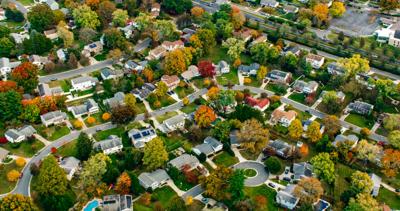


Helicopter shot of the northern suburbs of Washington, D.C. in fall, looking down on residential streets.
A great city can still disappoint if the specific neighborhood doesn't fit. Veterans who spend months identifying the right metro sometimes overlook the next step: evaluating the blocks where they'd actually live day to day. Choosing a neighborhood well means looking past curb appeal and checking whether the street, the surrounding services, and the community around it genuinely support the life you've earned.
That gap between a good city and a good neighborhood is where relocation decisions often go sideways. The right county might have excellent VA access, low taxes, and a strong veteran population — but the specific ZIP code you land in shapes everything from your morning commute to your sense of belonging. Here's a practical checklist for doing that deeper work before you sign anything.
Check VA and Medical Facility Distance Before Anything Else
People are also reading…
Proximity to health care isn't a nice-to-have for most veterans — it's the factor that determines whether a neighborhood is livable long term. Map the drive to the nearest VA medical center, VA clinic, and Tricare-network hospitals from any address you're seriously considering. Factor in traffic at the times you're most likely to travel, not just off-peak. A 40-minute rush-hour drive to a VA facility can quietly erode quality of life in ways that don't show up during a Saturday house tour. If you rely on specialty services — audiology, orthopedics, mental health — confirm those are offered at the nearest facility rather than assuming they are.
Look for Veteran Service Organizations in the Area
The presence of active veteran service organizations — a VFW post, American Legion hall, DAV chapter, or Vet Center — signals something real about a neighborhood. These aren't just social clubs. They're access points for benefits navigation, peer support, and the kind of early network that makes settling into civilian life faster and easier. Call ahead and ask how active the chapter is. A well-attended monthly meeting tells you far more about the local veteran community than any relocation brochure does.
Gauge the Share of Veterans in the Area
Most real estate data sources and census tools let you look up the veteran population by ZIP code or county. Neighborhoods with a higher share of veterans tend to develop better informal networks: neighbors who understand what a PCS move feels like, local employers who actively recruit from the military community, and service providers who work routinely with VA benefits. In a Rocket Mortgage survey on the best cities for veterans to retire in, 61% of service members said they were likely or very likely to retire near where they were stationed — which reflects how much weight veterans place on an already-familiar community. The neighborhood-level version of that logic works the same way: a visible presence of fellow veterans makes a place easier and faster to feel at home in.
Research Property Tax Rates and Local Veteran Exemptions
Property taxes vary block by block in some states, and veteran exemptions are applied at the county or municipal level, not statewide. Once you've identified specific neighborhoods, confirm the exact tax rate for the parcels you're considering and check whether the local jurisdiction offers a property tax exemption for veterans, disabled veterans, or surviving spouses. Some states offer full exemptions; others offer partial relief based on disability rating or age. Calling the county assessor's office takes fifteen minutes and can save thousands of dollars annually. It's worth doing before you fall in love with a particular street.
Test the Walkability and Daily Logistics
Walk the streets at the time of day you'd normally be out. Note the distance to a grocery store, a pharmacy, a gym, and a park. Veterans who thrive long-term in a neighborhood often mention the ability to handle daily errands on foot or with a short drive — not just because it's convenient, but because walkability supports physical activity and reduces the isolation that can quietly develop after retirement. Look up Walk Score ratings, but back them up with your own assessment of what's actually within reach and whether the sidewalks and paths are in good condition.
Talk to People Who Already Live There
No amount of online research replaces a direct conversation with a current resident. If you're visiting a neighborhood seriously, try to speak with a few people who live there — at a local coffee shop, outside the VFW, or through veteran-specific online groups for the city you're considering. Ask about neighbors, traffic, local government responsiveness, and whether the area genuinely feels welcoming to newcomers. Veterans relocating from a base assignment often underestimate how much a handful of early conversations can accelerate the sense of belonging in a new place. Someone who's already navigated that move may be one of the most valuable resources you can find.
Factor In Long-Term Accessibility
Think about the neighborhood not just as it fits your life today, but as it might fit your life ten or fifteen years from now. Are the streets flat and easy to move through? Is there public transportation available if driving becomes less convenient? Are there single-story homes if stairs become a concern? Planning for accessibility now gives you the most options and possibly the best prices. Accessible neighborhoods also tend to hold value well, which works in your favor whether you stay or eventually sell.
Take One More Walk at Night
The neighborhood you toured at 2 p.m. on a Tuesday may feel quite different at 8 p.m. on a Friday. Street lighting, foot traffic, noise levels, and the character of a block after dark are all worth seeing before you commit. It doesn't require much time, and it tends to resolve lingering doubts faster than another round of online research. Good neighborhoods at night feel the same as they do during the day — that consistency is what you're looking for.